
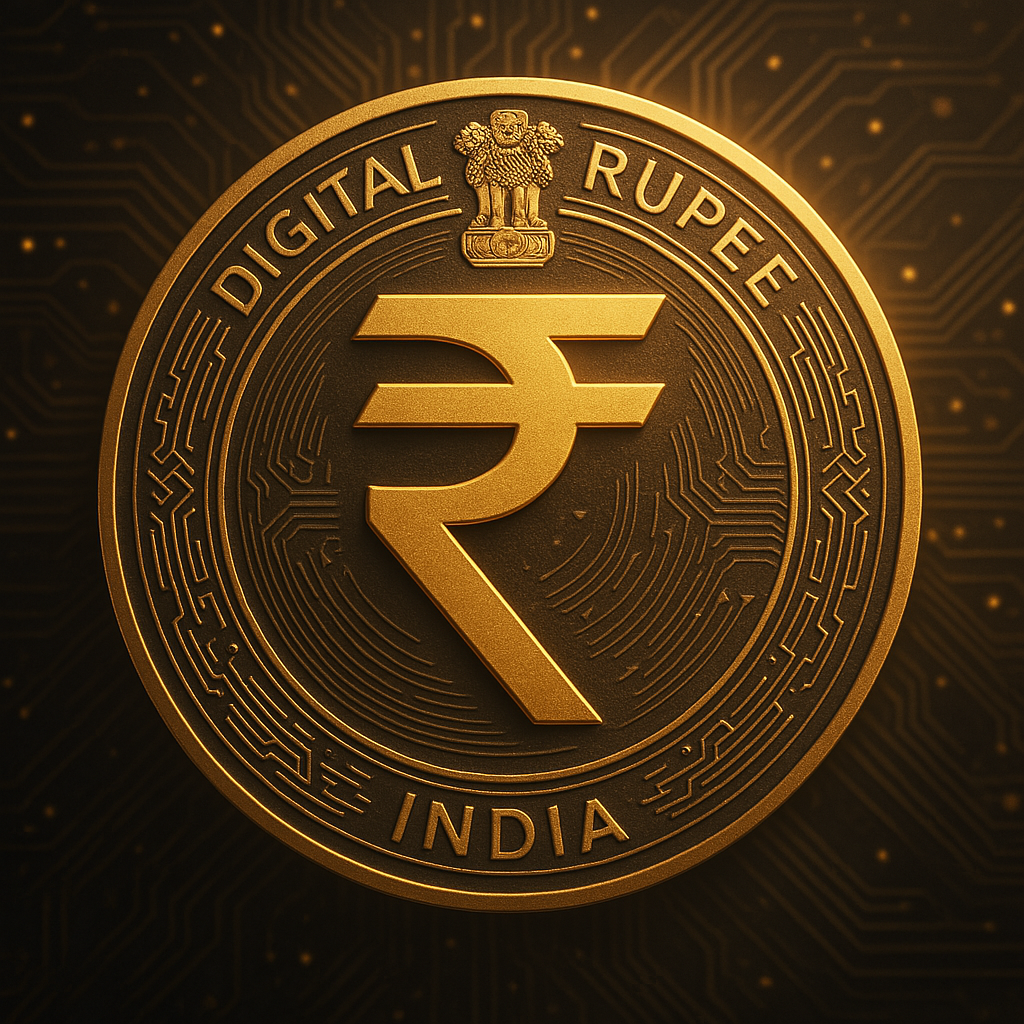
The Digital Rupee (e₹), also known as eINR or e-rupee, is India’s Central Bank Digital Currency (CBDC), issued by the {Annotation: The RBI is the central bank of India and the issuer of the Digital Rupee.}. It’s a digital version of the physical Indian rupee, with the same value (1 e₹ = ₹1) and legal tender status.
Here’s a breakdown of key aspects:
- What it is:
It’s a tokenized digital version of the Indian rupee.
It functions similarly to physical cash but exists digitally.
It’s issued and regulated by the RBI, making it a sovereign-backed currency with inherent trust and security.
It uses blockchain distributed-ledger technology for security and transparency. - Types of Digital Rupee:
Retail CBDC (e₹-R): Intended for everyday transactions by individuals and businesses.
Wholesale CBDC (e₹-W): Used by financial institutions for interbank settlements and large-value transactions. - How it works:
Loading: Users can load Digital Rupee into a digital wallet provided by participating banks from their linked bank account or via UPI.
Sending: Users can send Digital Rupee to others through their mobile number or by scanning a QR code.
Receiving: Users can receive Digital Rupee by sharing their QR code or phone number.
Redeeming: Users can redeem Digital Rupee back into their linked bank account. - Advantages:
Reduced Cost of Cash Management: Potential for significant cost savings by reducing the need for printing and managing physical currency.
Increased Efficiency: Transactions are designed to be instant and final, potentially streamlining payment processes.
Enhanced Security: Leverages blockchain and encryption for secure transactions, reducing the risk of fraud and counterfeiting.
Financial Inclusion: Aims to provide greater access to formal financial services, potentially benefiting the unbanked and underbanked.
Programmable Payments: Allows for programming of payments for specific purposes, such as direct government benefit transfers.
Offline Functionality (Future): Planned for offline transactions in areas with limited internet access.
Potential for Cross-Border Payments: Being explored to streamline international transactions. - Challenges:
Privacy Concerns: Potential for traceability of transactions, raising privacy concerns for some users.
Digital Divide: Requires access to digital devices and digital literacy for usage, potentially excluding those without such access.
Cybersecurity Risks: Like any digital system, it’s susceptible to cyberattacks, requiring robust security measures.
Coexistence with UPI: India’s dominant digital payment system (UPI) presents a challenge for widespread adoption of the Digital Rupee.
Lack of Interest Bearing: The Digital Rupee, like physical cash, doesn’t offer interest.
Usability Issues: Some users have expressed concerns about the perceived lack of additional benefits compared to existing digital payment methods like UPI. - Current Status:
Both the wholesale and retail versions are in pilot mode as of 2025.
The RBI is exploring new features like programmability and offline capability.
Several banks are participating in the pilot and offering digital rupee wallets.
The Digital Rupee is a significant step towards modernizing India’s financial system, aiming to enhance efficiency, transparency, and security while providing a safe and regulated digital alternative to cash.